When you want to sustainably tap into your team’s potential!
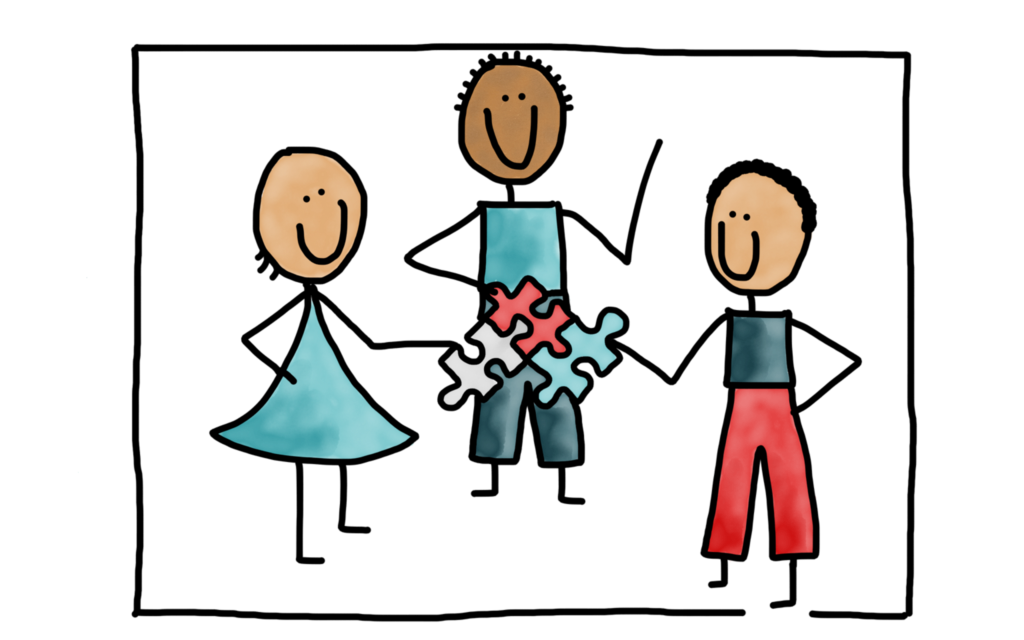
A proud team works together
In proud teams, people truly collaborate. They leverage each other’s strengths and recognize the value of mutual differences. They communicate openly and trust one another. This allows them to give each other honest feedback: focusing on the issue, not the individual. Leaders of such proud teams give their members the space to grow and take ownership, while ensuring a psychologically safe environment. Proud teams will go the extra mile—and through fire—for one another!
A proud team improves every day
People in proud teams see opportunities to do things a little better every single day. They look for the root causes of problems. Moreover, they dare to stick their necks out and try something new that deviates from the beaten path. Errors are viewed as learning experiences. This leads to daily improvements that are noticeable to customers and infectious to other teams.
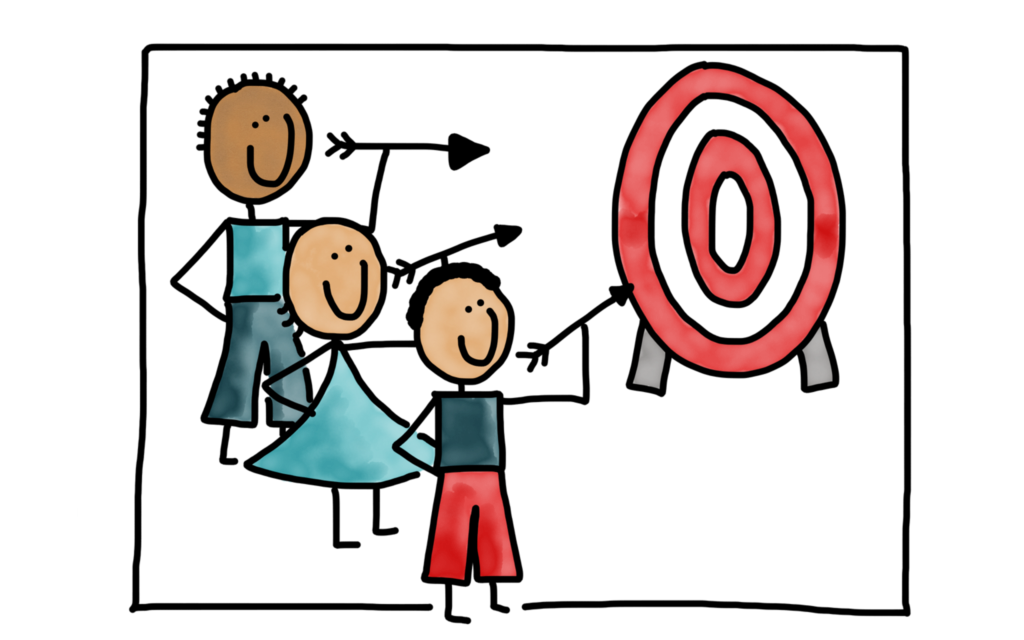
A proud team realizes its ambitions
Proud teams have an inspiring vision of the role they play for both their customers and their colleagues. They are ambitious and know what they want, which brings focus to their daily activities. Goals are broken down into small, manageable chunks. They look ahead, ensuring they stay on track and can adjust course when necessary. Their successes are celebrated—leaving them beaming with a sparkle in their eyes!
Becoming a proud team is a skill you can learn
In life, we learn all sorts of things: at school, we learn language and math; at sports clubs, we learn how to play ball; driving schools teach us how to drive; we even get certificates for tying our shoelaces… But nowhere do you truly learn how to collaborate. We all just jump into the deep end. Sometimes we fare well, but often we don’t get the most out of the collaboration. That is such a waste, because there is so much to learn and discover about meaningful and fulfilling teamwork.
We are forming a new (project) team and want to get off to a flying start.
As a team, we are on the verge of a significant change.
We want to improve our collaboration so that we can take flight (again)!
A lot has happened in a short time, and we would like to make a fresh start.
There is friction or tension within our team.
We want to become a self-managing team.
Our ambition could be sharper, and we want to translate that into practical action.
"The high fives in a team—that’s what I do it for!"
Guiding principles
My work with teams and organizations is based on several leading principles:
Teams are unique, creative, and resourceful
Teams often prove to be perfectly capable of solving their own problems. Ideas and solutions are frequently hidden beneath the surface and become visible when the team looks at itself through a different lens. Every team is unique. The better a team can perceive that unique tapestry of connections between its members, the more resilient and resourceful it becomes.
Every voice matters
I believe that every voice carries important information for the team. Every team member sees a piece of the truth. A team that is curious about “other truths”—even if they feel uncomfortable at first—is a team that effectively utilizes its differences.
New insights arise from perceiving differently
As humans, we are trained to primarily use our rational minds. While that brain is incredibly valuable, there is so much additional wisdom to be discovered by perceiving in different ways—for example, by tapping into the creative and intuitive mind. By working in a playful and interactive manner, the team accesses new information, unlocking paths that were previously invisible.
Teams are in constant flux
Teams constantly deal with change, sometimes initiated from the outside (such as reorganizations) and often from within. Change often brings uncertainty. The most agile teams do not avoid difficult situations; instead, they are curious about what they can learn from them.
Learning sticks best in a practical context
Teams learn most effectively when learning experiences align with their practical needs. Those needs are therefore leading when designing a coaching trajectory. Conversely, new insights and behaviors only truly stick when they are applied and practiced in daily operations.